Atalante X, Wandercrafts Self-Balancing Rehabilitation Exoskeleton, Receives ARCSA Clearance in Ecuador, Advancing Latin American Expansion


NEW YORK and QUITO, Ecuador, July 27, 2026 (GLOBE NEWSWIRE) -- Wandercraft, a global robotics company specializing in self-balancing, AI-enabled mobility solutions, announced today that Ecuadors health authority, the Agencia Nacional de Regulación, Control y Vigilancia Sanitaria (ARCSA), has cleared Atalante X for rehabilitation use in individuals with spinal cord injuries (C4 to L5), stroke-related hemiplegia, and multiple sclerosis. The clearance marks an important milestone in Wandercrafts plans to expand access to advanced rehabilitation technology across Latin America.
This regulatory milestone represents a foundation for Wandercrafts broader Latin America expansion strategy. Atalante X is already in use at over 150 clinical and research sites worldwide, enabling rehabilitation teams to deliver hands-free, overground walking sessions to eligible patients with severe mobility impairments.
Atalante X was developed to help more people stand, walk, and engage in intensive rehabilitation, including patients for whom conventional or crutch-assisted gait training may not be feasible, said Matthieu Masselin, co-founder and CEO of Wandercraft. ARCSA clearance in Ecuador highlights the growing recognition of self-balancing exoskeleton technology and advances our mission to make advanced rehabilitation more accessible to people affected by neurological conditions in Latin America and around the world.
La Clínica de Lesiones Deportivas in Quito will be the first center in Ecuador to offer Atalante X. This installation will give Ecuadorian clinicians access to a self-balancing robotic gait-rehabilitation platform trusted by leading institutions worldwide.
Neurological rehabilitation depends on providing patients with repeated opportunities to practice meaningful movement, said Dr. David Cabrera, Holding Médico Atalante X enables rehabilitation teams to engage a broader range of eligible patients in intensive overground walking, including those whose impaired balance, trunk control, or upper-extremity strength may limit their use of other systems. For patients with severe mobility impairments, the chance to stand and walk during therapy can be life-changing.
Ecuador is part of Wandercrafts broader effort to broaden access to advanced rehabilitation technology in Latin America. The company is also evaluating opportunities in additional regional markets, including Costa Rica and Chile, as rehabilitation centers seek new ways to support patients with complex neurological conditions, increase therapy intensity, and improve patient engagement.
Atalante X is the worlds first self-balancing, hands-free overground rehabilitation exoskeleton. Unlike exoskeletons that require crutches or walkers for stability, Atalante X provides autonomous balance control, allowing eligible patients to stand and walk hands-free during supervised rehabilitation sessions.
The device is designed to support high-dose, task-specific overground gait training, which is a key principle of neurological rehabilitation. By enabling repeated stepping, weight shifting, turning, and multidirectional movement, Atalante X gives clinicians an advanced tool to increase patient engagement and improve rehabilitation outcomes. Its powered ankle works with powered hip and knee joints and self-balancing control to support walking patterns relevant to rehabilitation and real-world mobility.
Atalante X also offers practical and operational advantages for rehabilitation centers. It supports high step counts, reduces therapists physical demands, and integrates into daily clinical routines. Its seated donning process and hands-free design allow therapists to focus on therapeutic objectives rather than on continuous balance management. These capabilities may help centers address rising patient complexity, staffing shortages, and pressure to improve outcomes. Economic models and comparative studies suggest that self-balancing exoskeleton technology may increase active therapy time, support patient flow, and reduce costs associated with adverse events.
Introducing Atalante X in Ecuador is about more than a new regulatory milestone, added Masselin. It is about equipping rehabilitation teams with new tools for recovery, giving patients new opportunities to stand and walk during therapy, and supporting broader access to advanced mobility care in the region.
About Wandercraft
Wandercraft is a global robotics company on a mission to restore mobility and expand whats possible through self-balancing, AI-enabled systems. Known for its groundbreaking Personal Exoskeleton, Eve, Wandercraft is developing the next generation of mobility solutions to restore walking ability both during rehabilitation and for personal use in indoor settings. Its flagship device, Atalante X, is the worlds first self-balancing exoskeleton used at more than 150 inpatient and outpatient rehabilitation centers worldwide. Committed to innovation and accessibility, Wandercraft welcomes collaboration with rehabilitation centers, healthcare professionals, and the broader community of wheelchair users to expand opportunities in modern mobility. Learn more at wandercraft.eu.
Contact
Lilly Kofler
Wandercraft
Global Vice President, Growth
lilly.kofler@wandercraft.health
A photo accompanying this announcement is available at https://www.globenewswire.com/NewsRoom/AttachmentNg/81199a0d-7918-4554-b30c-9402d16f46e0


Atalante X exoskeleton by Wandercraft.
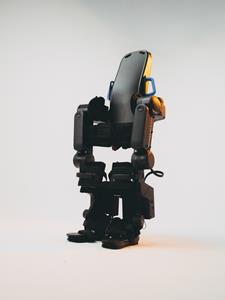
Wandercraft's Atalante X is the worlds first self-balancing, hands-free overground rehabilitation exoskeleton.
A OESP nao e(sao) responsavel(is) por erros, incorrecoes, atrasos ou quaisquer decisoes tomadas por seus clientes com base nos Conteudos ora disponibilizados, bem como tais Conteudos nao representam a opiniao da OESP e sao de inteira responsabilidade da GlobeNewswire